
 |
The Basics of Hospital Chaplaincy : A Basic Introduction and Fundamental Guide to Hospital Chaplaincy BV4375.M33 2003 |
 |
Battles of the Bible : a Military History of Ancient Israel "A study of the wars of ancient Israel, which ranges from the invasion of Canaan by the Israelites under Joshua's command to the Maccabees' successful rebellion against Seleucid domination, updated to take account of new research, with new maps and plans throughout." BS680.W2H47 2006 |
 |
Camerone : the French Foreign Legion's greatest battle "The first detailed account in English of the battle that defined the elite unit's fidelity to the mission. The battle was fought at Camerone, some 40 miles west of Vera Cruz, Mexico, on April 30, 1863; the opponents were the half-strength 3d Company, 1st Battalion, of the Legion opposed by more than 2,000 Mexican regulars and guerrillas." F1233.R98 1996 |
 |
Chaplaincy in Law Enforcement: What Is It And How to Do It "Thoroughly revised and rewritten, this new second edition serves as a comprehensive first step for law enforcement departments seeking a police chaplain as well as a useful resource for the experienced police chaplain. This text is a manual of procedures, concepts, guidelines, and forms that are presented in plain, clear language, yet with substantial depth of knowledge." BV4375.5 .C48 2005 |
 |
The Christ Chaplain: The Way to a Deeper, More Effective Hospital Ministry "The Christ Chaplain: The Way to a Deeper, More Effective Hospital Ministry is an instructive guidebook for health care chaplains who struggle with the high levels of stress that have become commonplace in modern medicine as they work longer hours for lower wages yet get to spend less time with patients.This unique book teaches chaplains how to achieve better spiritual health by practicing spiritual self-care through centering prayer." BV4375.P46 2007 |
 |
The Complete Corporate Chaplain's Handbook "This text exists to fill the procedural and information gap for workplace ministry. The content found on these pages is a culmination of more than 50 years of workplace experience, 26 years of higher level education, and nearly 30 years of ministry experience." BV2695.W6C74 2006 |
 |
Cooperation Without Compromise: Faithful Gospel Witness in a Pluralistic Setting "So how do we conduct faithful gospel ministry in this setting? As pastors? As chaplains? As church planters? As Christians in the workplace? In Cooperation without Compromise Dr. Michael A. Milton answers this timely question through coming to terms with pluralism, finding a working model to deal with it, testing the model against Scripture, and applying it in real life ministry settings." BR115.C8M55 2006 |
 |
The Face of War "Martha Gellhorn was a fearless war correspondent for nearly fifty years and a leading journalistic voice of her generation. From the Spanish Civil War in 1937 through the wars in Central America in the mid-eighties, her candid reporting reflected her deep empathy for people no matter their political ideology, and the openness and vulnerability of her conscience." D431.G4 1988 |
 |
For God and Country: Considering the Call to Military Chaplaincy "Considering the call to ministry can be a difficult process. When one senses a call to ministry outside the traditional church setting, such as the military chaplaincy, there can be a greater deal of difficulty in discerning the call. The author writes from a Christian perspective and holds the premise that the vocation of military chaplaincy is a high and honorable calling from God.This project examines the call to serve as a military chaplain in the United States Armed Forces among a group of fifteen seminary students. The majority of the participants were students at Columbia International University. Several others attended Liberty Baptist Theological Seminary." UH23.B64 2015 |
 |
Generally Speaking: A Memoir by the First Woman Promoted to Three-Star General in the United States Army "America's first three-star female general presents a personal account of her thirty-two-year career in the U.S. Army, describing her experiences in a male-dominated profession, from her 1969 enlistment as a young officer in the Women's Army Corps, through her Pentagon service, to her retirement in 2000. (Biography)" U53.K455A3 2001 |
 |
God at Ground Zero: How Good Overcame Evil, One Heart at a Time "God @ Ground Zero recalls these stories interspersed with actual e-emails sent from his PalmPilot has he worked in the shifting rubble. Out of the horror of 9/11 rises a testimonyto the love and faithfulness of a God who is always near, waiting with the power to heal." BR1725.G495A3 2002 |
 |
The God Who Fights: The War Tradition in Holy Scripture BS680.W2S44 1993 |
 |
Gun Totin' Chaplain "Gun Totin Chaplain, is the author's gripping chronicle of his year of duty in Vietnam. From the draft notice he received on his wedding day through airborne jump school and his subsequent time in Vietnam, the reader follows a man of peace as he ministers to men at war. During his year in Vietnam, Chaplain Autry spent more time in the field with the troops than in rear areas, a choice that vexed his superiors. His wartime experiences propelled him through a lifetime of comforting the afflicted and afflicting the comfortable." UG626.2.A98A3 2006 |
 |
Handbook for Chaplains: Comfort My People "This book is a concise source of information on eight different faith traditions. For each tradition, there is a brief outline of the principle beliefs, something about birth, the diet regulations, sickness, dying/death, and appropriate prayers that could be said with patients." BV4375.T66 2006 |
 |
Health Care Chaplaincy in Oncology BV4335 .H33 1992 |
 |
Holy War: The Crusades and Their Impact on Today's World "In 1095 Pope Urban II summoned Christian warriors to take up the cross and reconquer the Holy Land. Thus began the holy wars that would focus the power of Europe against a common enemy and become the stuff of romantic legend. In reality the Crusades were a series of rabidly savage conflicts in the name of piety. And, as Armstrong demonstrates in this fascinating book, their legacy of religious violence continues today in the Middle East, where the age-old conflict of Christians, Jews, and Muslims persists." D157.A76 1992 |
|
|
Hospital Chaplaincy in the Twenty-first Century "This book charts the changing role of hospital chaplains and examines through detailed case studies the realities of practice and the political debates which either threaten or sustain the service." BV4335.S95 2009 |
 |
Hospital Ministry: The Role of the Chaplain Today "Admirably captures both the experiential and conceptual dimensions of the work of the hospital chaplain. As such, this book serves equally well as an introduction to pastoral care for medical personnel, patients, and clergy, and as an important addition to the professional literature of the pastoral care field." BV4335.H673 1985 |
|
How do Chaplains Stay Faithful to Their Evangelical Distinctive in the USAF? BV4070.C684A53 2008 |
 |
Leadership Paradigms in Chaplaincy "This dissertation argues that business people, clergy, lay persons, and many chaplains do not understand the leadership and management dynamics of chaplaincy, and this lack of knowledge has a direct impact on how chaplaincy is done and not done in certain areas. In chaplaincy and many churches, leadership, management, and ministry have a synergistic effect when they come together in response to a problem or crisis." BV4375 G738 2007 |
 |
The Leapin' Deacon "This biography about Chaplain Conrad Walker tells of his extraordinary life based on values and dictums garnered during his early years. He was a champion athlete, a military hero, a spiritual giant, and a dedicated family man. Readers will be uplifted as Connie displays his joy and humor by sharing anecdotes of the growing of a legend. Connie served as chaplain with the 101st and 173rd Airborn. He ministered to the Sky Soldiers in Vietnam and served as a Command Chaplain the the U.S. and abroad." BR1725.W35. A3 2004 |
 |
Making Chaplaincy Work: Practical Approaches "With compassion and commitment, practicing chaplains draw on a wide range of professional experiences and discuss principles, themes, and guidelines that have enhanced their ministries. These practical and successful approaches are aimed at helping others face the daily professional challenges of health care chaplaincy. The issues and responsibilities of chaplaincy work with a variety of patient populations--AIDS sufferers, long-term care patients, stroke victims, and the terminally ill--are thoroughly explored. Contributors provide creative and innovative methods of meeting the needs of hospital patients and their families as well as health care personnel, such as implementing a volunteer clergy program and establishing a surgical reporting plan." BV4335.M34 1988 |
 |
The Military Marriage Manual: Tactics for Successful Relationships "The Military Marriage Manual: Tactics for Successful Relationships is an invaluable aid to members of the military and their spouses and families. The book presents advice for couples on a range of issues, both extraordinary and mundane, both those specific to military marriages and those common to all marriages." U766.H55 2010 |
 |
Ministry in the Spiritual and Cultural Diversity of Health Care: Increasing the Competency of Chaplains "Ministry in the Spiritual and Cultural Diversity in Health Care explores the challenges for the spiritual care professional in health care to address the emotional, cultural, and spiritual needs of a patient without assumption, bias, or discomfort for either person. In addition to advice, recommendations, and real-world examples and case studies, this valuable resource provides a guide for chaplaincy supervisors to use when training chaplain students to impart such unprejudiced care. The book is devoted to establishing chaplains who are clinically trained and certified to contribute to the increasingly pluralistic and global health care context with assorted religious, spiritual, and cultural values, beliefs, and practices." BV4335.M55 2004 |
 |
Narrative Analogy in the Hebrew Bible: Battle Stories and Their Equivalent Non-Battle Narratives "This volume sheds fresh light upon the phenomenon of narrative doubling in the Hebrew Bible. Through an innovative interdisciplinary model the author defines the notion of narrative analogy in relation to other literatures where it has been studied such as English Renaissance drama and makes extensive critical use of contemporary literary theory, particularly that of the Russian formalist Vladimir Propp. His exploitation of narrative doubling, with a focus upon the metaphorical, reorients our reading by uncovering a major dynamic in biblical literature." BS1199.M47B47 2004 |
 |
Outside the Gates: The Need for Theology, History, and Practice "The great task before Christian workers, chaplains in particular, is to find a way to work within the systems of this world in order to redeem and sanctify those systems in the authority of our Lord, Jesus Christ, who sends them. Chaplains are present in some of the darkest, most impoverished, oppressed, and immoral places on this earth. Their mission is very clear: to be present with the brokenhearted and needy, while working with and within the systems that affect the lives of those they seek to help." BV4375 .C75 2011 |
 |
A Pastoral Counselor’s Model for Wellness in the Workplace: Psychergonomics "A Pastoral Counselor's Model for Wellness in the Workplace: Psychergonomics takes the concept of ergonomics beyond physical and environmental concerns to include a holistic interconnectedness of mind, body, and spirit. This unique book examines how psychosocial factors like family, conflict, emotional stress, addiction, and financial pressures can impact an employee's health and well-being. It incorporates a new paradigm of health care into wellness in the corporate setting, adding a new dimension to human health and safety." BV2695.W6M46 2003 |
 |
A Practical Guide to Hospital Ministry: Healing Ways "A Practical Guide to Hospital Ministry: Healing Ways is a comprehensive resource that examines the roles and responsibilities of hospital chaplains. It will help you make a shift toward a knowledge- and skill-based ministry that both incorporates and goes beyond current training approaches." BV4335.M29 2002 |
 |
Prison to Praise "A most inspired account of the grace of God working in a human life...' Norman Vincent Peale An enlightening book that is not about a prison with bars, but about a prison of circumstances - and how to be set free! Millions say it has changed their lives and introduced them to the solution to their problems." BV220.C3 |
 |
Professional Chaplaincy and Clinical Pastoral Education Should Become More Scientific: Yes and No "Professional Chaplaincy and Clinical Pastoral Education Should Become More Scientific: Yes and No examines the widespread ambivalence among pastoral caregivers and educators over the growing inclusion of science in pastoral care and counseling methodologies. Twenty-three seasoned professionals in the field give candid and sometimes emotional accounts of their interest inand reservations aboutthe role scientific research plays in their profession. Some authors look at the issue from a historical perspective; others voice additional concerns. A few make concrete proposals on how chaplaincy can become more scientific. The result is a unique insight into the relationship between the secular and the religious." BV4375.P76 2002 |
 |
A Quiet Reality: A Chaplain's Journey Into Babylon, Iraq with the 1st Marine Expeditionary Force "A QUIET REALITY is a heartwarming and hopeful story that invites you to join Chaplain Marrero in this exciting journey through Iraq as he ministered to US Marines. Join him through an exhilarating tactical convoy during his first night in Iraq, through the painful ministry to the wounded and dead. Reflect with him as he ponders on this quest as a man in uniform and a pastor. Walk with him through the ancient ruins of Nebuchadnezzar s Palace in Babil and join him on an exciting quest to open biblical history to his Marines while he seeks to care for the Iraqis around him." DS79.76.M363 2009 |
 |
The Recruiting Officer "Farquhar's The Recruiting Officer is set in Shrewsbury in 1704 and describes what happens in a country town when the army come to stay. With cross-dressing and confusion in plenty, this is a comedy exploring the timeless themes of love and war. One of Farquhar's last two plays, The Recruiting Officer is both entertaining and touching. It has a light, humane touch and its original depiction of a real-life provincial town comically explores the impact that ongoing warfare had on its civilian society." PR3437.R4 2011 |
 |
Serving Two Masters: The Development of American Military Chaplaincy, 1860-1920 "Chaplain Richard M. Budd has made a welcome, concise, well written and researched contribution to an overlooked chapter in chaplain history. Anyone interested in gaining a better understanding of how the professional and fully institutionalized chaplaincy of today's military came about would do well by consulting Budd's book." --Bradley L. Carter, On Point. Military chaplains have a long and distinguished tradition in the United States, but historians have typically ignored their vital role in ministering to the needs of soldiers and sailors. Richard M. Budd corrects this omission with a thoughtful history of the chaplains who sought to create a viable institutional structure for themselves within the U.S. Army and Navy that would best enable them to minister to the fighting men." BS2685.C3 1995 |
 |
Sword of the Lord, The: Military Chaplains from the First to the Twenty-First Century "The Sword of the Lord is the first book to examine military chaplains and the development of the military chaplaincy across history and geography―from the first to the twenty-first century, from Europe to North America. The scope of this work reveals the astonishing fact that the military chaplaincy has existed in a recognizable form for more than 1,600 years. Contributors analyze specific historical moments in the development of the chaplaincy, beginning in antiquity and progressing through the Crusades, the English Civil War, the American Civil War, both World Wars, and the Vietnam War." UH20 .S96 2004 |
 |
Take Up the Shield: Comparing the Uniform of the Police Officer & the Armor of God "Written by a street cop, this unique publication compares the various pieces of law enforcement equipment to the spiritual armor that the Bible describes in Ephesians chapter 6. The importance of each piece of equipment is driven home through engaging, real-life police stories (responding to the infamous L.A. Riots, the devastating 1994 Northridge earthquake, working in jails, making arrests, and more)." BV4375.5.M53 2005 |
|
Toward a Strategy for Developing Effective Christian Leadership in the Nigerian Army : Enhancing the Implementation of the Great Commission through Theological Education by Extension BV4070.C68A93 1986 |
 |
The Work of the Chaplain "An ideal starting point for all, including seminarians, who are exploring a call to chaplaincy ministry. Unlike most other books in this field which are specific to one form of chaplaincy and are often written from an autographical viewpoint only, this new resource meets a critical need for an introductory and overview look at chaplaincy in general." BV4375 .P34 2006 |
 |
A World Atlas of Military History, 1945-1984 "Maps illustrate important battles, invasions, and military actions from the partition of Germany to the U.S. invasion of Grenada." G1046.S73 H3 1984 |
Chaplaincy Research Guide

 |
American Soldiers Overseas: The Global Military Presence "Through case studies of communities around the world, Baker shows that the U.S. armed forces have had a surprisingly large impact both positive and negative on the affairs of many (but not all) host societies, including economic revitalization, cultural change, and, sometimes, tragic social consequences. In not a few cases, the U.S. military presence has become politically controversial on a national level. On the other hand, many host nations have successfully circumscribed the activities of military communities, rendering their potentially disruptive presence almost invisible." |
 |
Army Science and Technology for Homeland Security: Report 2: C4ISR "Shortly after the events of September 11, 2001, the U.S. Army asked the National Research Council (NRC) for a series of reports on how science and technology could assist the Army meet its Homeland defense obligations.This second report focuses on C4ISR and how it can facilitate the Army's efforts to assist the Department of Homeland Security (DHS) and emergency responders meet a catastrophic event." |
 |
Beginnings of the Cold War Arms Race "The Truman administration's decision to embark on an arms build-up in 1950 was a critical event. For the first time other than a World War, the United States became a global military presence. Unlike the World Wars, in this instance the deployment lasted decades, altering the nature of the Cold War and the United States'global role. Such a decision deserves a book dedicated to understanding the strategy and politics behind it. It also outlines the factional fighting within the Truman administration over military spending and deployments and considers the Truman administration's perceptions of Soviet military power and intentions. The author presents a fascinating account of the strategy and politics behind the Truman administration's decision to engage in a massive arms build-up that initiated the Cold War arms race." |
 |
Chaplaincy in Law Enforcement: What Is It And How to Do It "Thoroughly revised and rewritten, this new second edition serves as a comprehensive first step for law enforcement departments seeking a police chaplain as well as a useful resource for the experienced police chaplain. This text is a manual of procedures, concepts, guidelines, and forms that are presented in plain, clear language, yet with substantial depth of knowledge. Major topics include how to get started as a Chaplain; how to relate to law enforcement department people; theological foundations; confidentiality; crisis intervention and counseling; death notifications; disasters; domestic disputes; officer deaths and funerals; addicted officers; hostage negotiations; and victim assistance. In addition, the Appendices offer resources for services; the Chaplain's Code of Ethics; a model for starting a chaplaincy program; requirements to be a chaplain; the Chaplain's Oath; plus where and how to receive chaplain training. All of the above features serve to fulfill the central purpose of the book: to enable law enforcement administrators to establish a program for chaplaincy, and, for experienced chaplains, to find new ideas to add to what they are doing. This book will also help parish clergy and leaders understand the role of law enforcement chaplaincy within a community." |
 |
Changing Military Doctrine: Presidents and Military Power in Fifth Republic France, 1958-2000 "As Rynning shows, armed forces have a natural interest in shaping military doctrine according to their resources, doctrinal traditions, as well as their assessment of the international environment. However, armed forces are also the instrument of policy-makers who are in charge of national security. Using civil-military relations in France from 1958 to the present as a case study, he shows when policy-makers are capable of controlling military doctrine as well as the means armed forces rely on to influence doctrine." |
 |
Competition and Innovation in the U.S. Fixed-Wing Military Aircraft Industry |
 |
A Cumulative Bibliography of Medieval Military History and Technology "This bibliography has compiled the most complete list of secondary references to works in medieval military history and the history of military technology. It covers a geography which centers on conventional medieval boundaries-Europe, Byzantium, and the Middle-East, with a chronology that stretches from the Late Antiquity to 1648." |
 |
Encyclopedia of Military Technology and Innovation "From the Abrams M1 tank to the zeppelin, this essential reference details the invention and evolution of nearly 600 of the most important advances in military technology from prehistory to the present. International in scope, it covers weapons, ammunition, defenses, land vehicles, aircraft, ships, detection, stealth, gear, supplies, weapons of mass destruction, and much more. Whether researching such cutting-edge technologies as the B-2 Stealth Bomber, Patriot Missile, and the Roborat project or such historical topics as forts, Molotov cocktails, or the U-2, Encyclopedia of Military Technology and Innovation is a must-have reference." |
 |
An Encyclopedic Dictionary of Conflict and Conflict Resolution, 1945-1996 "Rather than mark the end of conflict, the end of World War II began a half century of ideological, political, military, economic struggles, and many with century-old antecedents. This work brings together in encyclopedic format most of the major events of the last half century that can be classified as conflict. While war is the ultimate conflict, the volume includes assassinations, coups, insurgency, terrorism, massacres, and genocide. It provides detailed information on the people, places and events that have produced conflict and its resolution since 1945." |
 |
Fanaticism and Conflict in the Modern Age "What is fanaticism? Is the term at all useful? After all, one person's fanatic is another's freedom fighter. This new book probves these key questions of the twenty first century.It details how throughout history there have been fanatics eager to pursue their religious, political or personal agendas." |
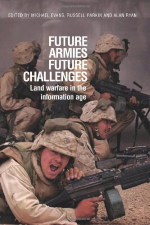 |
Future Armies, Future Challenges: Land Warfare in the Information Age "Contributions from some of the world's leading strategic thinkers on land warfare are collected in the work. The operational, strategic, and ethical conundrums that soldiers, their commanders, and the societies they serve will have to wrestle with in the future are analyzed by the experts, paying close attention to the impact of the information age. Topics such as urban warfare, coalition operations, the revolution in military affairs, asymmetric warfare, close combat, peacekeeping, military training and recruiting, and the challenges posed by terrorism are addressed." |
 |
The Geeks of War "Wars are fought on the battlefield, but the technologies that enable 21st-century warfare are developed in research laboratories. Within the walls of corporate, government, and academic labs, researchers are probing the edges of science to uncover technologies that will make warfare more efficient-and more deadly. This book looks at the people behind the curtain, and at the next generation of tactical, information, communication, vehicular, biological, and crypto-graphic systems. Featuring in-depth interviews with the project directors and scientists performing this groundbreaking research, The Geeks of War also examines their scientific, political, patriotic,and financial motives, as well as the implications these technologies may have for the future." |
 |
Giving Full Measure to Countermeasures: Addressing Problems in the DoD Program to Develop Medical Countermeasures Against Biological Warfare Agents "In recent years, substantial efforts have been initiated to develop new drugs, vaccines, and other medical interventions against biological agents that could be used in bioterrorist attacks against civilian populations. According to a new congressionally mandated report from the Institute of Medicine and National Research Council of the National Academies, to successfully develop these drugs, vaccines, and other medical interventions against biowarfare agents, Congress should authorize the creation of a new agency within the Office of the Secretary of the U.S. Department of Defense. Giving Full Measure to Countermeasures also identifies other challengessuch as the need for appropriate animal models and laboratories equipped with high-level biosafety protectionsthat will require attention if DoD efforts to develop new medical countermeasures are to be successful." |
 |
History of Modern Wars of Attrition "A war of attrition is usually conceptualized as a bloody slogging match, epitomized by imagery of futile frontal assaults on the Western Front of the First World War. As such, many academics, politicians, and military officers currently consider attrition to be a wholly undesirable method of warfare. This first book-length study of wars of attrition challenges this viewpoint. A historical analysis of the strategic thought behind attrition demonstrates that it was often implemented to conserve casualties, not to engage in a bloody senseless assault. Moreover, attrition frequently proved an effective means of attaining a state's political aims in warfare, particularly in serving as a preliminary to decisive warfare, reducing risk of escalation, and coercing an opponent in negotiations." |
|
The Hutchinson Dictionary of Ancient and Medieval Warfare |
 |
Love, War and the Grail "This is a study of the appearances of the Knights Templar, Knights Hospitaller and Teutonic Knights in the French, German and English epic and romance literature of the Middle Ages. It examines their religious roles, such as caring for the sick, their warrior role of fighting Muslims, and examines the role of 'Templars' in the Grail romances. It traces how these roles developed over time and considers what function the appearances of these military religious orders performed in the composition of a work of fictional literature. The frequent appearances of the Military Orders in medieval fictional literature are of interest both to historians and to literary specialists. This is the first study to consider the subject in depth across the medieval period." |
 |
Militarism, Sport, Europe: War Without Weapons "A collection of essays exploring the relationship between sport and war, bringing together established authors that include Peter Beck, Hans Bonde, J.A. Mangan and Gertrud Pfister, and emerging authors such as Penelope Kissoudi, Orestis Kustrin, Callum McKenzie and Roberta Vescovi." |
 |
The Military and Teens: The Ultimate Teen Guide "The Military and Teens covers the major issues young adults should consider before making a decision to join the armed forces. Although each branch of the military provides print and electronic materials on what it has to offer enlistees, very few YA books take a pro-and-con look at military service. Moreover, commercial military books mostly cover specific wars or give tips on surviving induction and training." |
 |
Military Intelligence, 1870-1991: A Research Guide "This research guide is an introduction to military intelligence, a neglected aspect of warfare that provides commanders and national leaders with essential information for decision making. The introduction provides the general reader with an explanation of the terminology, procedures, and institutional problems of military intelligence, while outlining the history of this field and identifying areas for further research. The core of the guide is an extensively annotated bibliography of unclassified English language materials on military intelligence, the evolution of intelligence operations, the role of intelligence in air, ground, and naval operations, and specialized fields of espionage, counter intelligence, technical intelligence, and aerial photography. This guide is intended to fill a void in the literature for soldiers, historians, and general readers." |
 |
Military Leadership in the British Civil Wars, 1642-1651: 'The Genius of this Age' "Despite the wealth of British Civil Wars studies, little work addresses the nature of military leadership effectiveness in terms of the eventual result -parliamentary victory. It is no longer sufficient to credit religion, economics, localism or constitutional concepts for the outcome without considering the role of effective military leadership. The study of human conflict illustrates a simple, immutable truth -the finest, most inspired or motivated, well-trained, disciplined or experienced force is quite like a modern cruise missile. Without effective guidance, it is no more than a collection of very expensive parts." |
 |
Military Power, Conflict and Trade "Wherever international commerce flows in world politics, military power often flows with it - sometimes as a protector of commerce, sometimes as its promoters and sometimes as a tool of aggression against it. How are military power and international trade related? Do military power and commerce expand together or does military power decline as commerce (and perhaps interdependence) increases? Does this relationship vary across countries and, if so how? Power, Conflict and Trade is a study of the relationship between military power and international commerce among the Great Powers prior to World War I." |
 |
Monitoring Metabolic Status: Predicting Decrements in Physiological and Cognitive Performance "The U.S. military’s concerns about the individual combat service member’s ability to avoid performance degradation, in conjunction with the need to maintain both mental and physical capabilities in highly stressful situations, have led to and interest in developing methods by which commanders can monitor the status of the combat service members in the field. This report examines appropriate biological markers, monitoring technologies currently available and in need of development, and appropriate algorithms to interpret the data obtained in order to provide information for command decisions relative to the physiological “readiness” of each combat service member." |
 |
Naval Forces' Defense Capabilities Against Chemical and Biological Warfare Threats "U.S. naval forces must be prepared to respond to a broad array of threats. Of increasing importance are those from chemical and biological warfare (CW and BW). To help review its current state of preparedness, the Chief of Naval Operations asked the National Research Council (NRC) to assess the U.S. Navy’s defense capabilities against CW and BW threats. In particular to what extent are they being developed to enable naval forces to sense and analyze quickly the presence of chemical and biological agents, withstand or avoid exposure to such agents, deal with contamination under a broad spectrum of operational conditions, and over what period will these capabilities be realized. This report presents the results of that assessment. It provides an overview of the potential threats, and an evaluation of the Navy’s operations, non-medical programs, and medical countermeasures designed to confront those threats. The report also presents a series of general and specific findings and recommendations based on these assessments." |
 |
Nigerian Foreign Policy under Military Rule, 1966-1999 "Abegunrin provides a significant and comprenhensive examination of Nigerian foreign policy (1966-1999) during the almost 33 years of military rule, punctuated by the four-year civilian interregnum, 1979-1983. He analyzes what led to the military rule in 1966, and the foreign policy performance of each military regime that ruled the country since 1966. He also discusses extensively the economic dimension of the nation's foreign policy." |
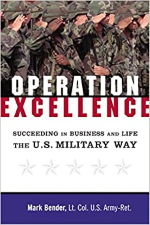 |
Operation Excellence: Succeeding in Business and Life the U.S. Military Way "Operation Excellence shows you how to harness the success strategies of the U.S. Army, Navy, Air Force, and Marine Corps and apply these strategies to every facet of your life. Colonel Bender will show you how the Arsenal of Victory—discipline, confidence, and sacrifice—combined with 50 Train Tough Strategies, can bring superior results in:" |
 |
Plotting a True Course: Reflections on USAF Strategic Attack Theory and Doctrine The Post World War II Experience "Examining wars from the allied victory in World War II to the conflict in Viet Nam, and finally to the operations in the Gulf and Kosovo, this book presents a comprehensive look at the evolution of strategic air attack theory and doctrine over the years." |
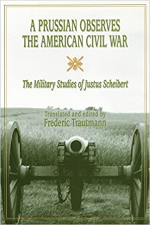 |
A Prussian Observes the American Civil War: The Military Studies of Justus Scheibert "Prussia, like much of nineteenth-century Germany, was governed by the belief that knowledge, and thus understanding, was best derived from direct observation and communicated through documentation. Justus Scheibert, an officer in the Royal Prussian Engineers, was therefore sent to the United States for seven months to observe the Civil War and report the effects of artillery on fortifications. His interests, however, surpassed that limited assignment, and his observations, as well as the writings translated in this work, went on to include tactics, strategy, logistics, intelligence, combined operations, and the medical service." |
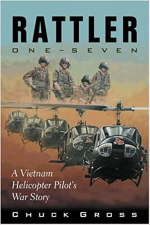 |
Rattler One-Seven "Rattler One-Seven puts you in the helicopter seat, to see the war in Vietnam through the eyes of an inexperienced pilot as he transforms himself into a seasoned combat veteran. When Chuck Gross left for Vietnam in 1970, he was a nineteen-year-old army helicopter pilot fresh out of flight school. He spent his entire Vietnam tour with the 71st Assault Helicopter Company flying UH-1 Huey helicopters. Soon after the war he wrote down his adventures, while his memory was still fresh with the events. Rattler One-Seven (his call sign) is written as Gross experienced it, using these notes along with letters written home to accurately preserve the mindset he had while in Vietnam." |
 |
Rethinking Military History "Rethinking Military History is a bold new 'thought book' that reconsiders military history at the beginning of the twenty-first century. The chapters provide a valuable and concise survey of the main themes in the study of military history from 1500 to the present day as Jeremy Black reveals the main trends in the practice and approach to military history and proposes a new manifesto for the subject to move forward. This must-read study demonstrates the limitations of current approaches, including common generalizations, omissions, and over-simplications. Engaging theoretical discussions, with reference to specific conflicts, suggest how these limitations can be remedied and adapted, whilst incorporating contributions from other disciplines. Rethinking Military History is essential reading for all those with an interest in military history, and all who wish to take part in moving the discipline forward." |
 |
Russia in the 21st Century: The Prodigal Superpower "This book demonstrates that Russia intends to re-emerge as a full-fledged superpower before 2010--challenging America and China and potentially threatening a new arms race. Contrary to conventional wisdom, this goal would appear to be easily within the Kremlin's grasp, but the cost to the Russian people and global security would be immense. Hence, Steven Rosefielde proposes a sophisticated strategy to dissuade President Vladimir Putin from pursuing the destabilizing course. His analysis conflicts with the post-cold-war image of the Soviet Union as a westernizing, mass consumption society committed to "peaceful coexistence." |
 |
The Shadows of Total War: Europe, East Asia, and the United States, 1919–1939 "The essays in this compelling collection examine the period between the two world wars of the twentieth century; one of the most exciting in the history of war. They explore the lingering consequences of World War I; the intellectual efforts to analyze this conflict's military significance; the attempts to plan for another general war; and several episodes in the 1930s that portended the war that erupted in 1939." |
 |
Transformation Under Fire: Revolutionizing How America Fights "Are we prepared to meet the challenges of the next war? What should our military look like? What lessons have we learned from recent actions in Afghanistan and Iraq? Macgregor has captured the attention of key leaders and inspired a genuine public debate on military reform. Macgregor's controversial ideas, favored by the current Bush administration, would reduce timelines for deployment, enhance responsiveness to crises, and permit rapid decision-making and planning." |
 |
The Unquiet Western Front: Britain's Role in Literature and History "Britain's outstanding military achievement in the First World War has been eclipsed by literary myths. Why has the Army's role on the Western Front been so seriously misrepresented? This 2002 book shows how myths have become deeply rooted, particularly in the inter-war period, in the 1960s, and in the 1990s. The outstanding 'anti-war' influences have been 'war poets', subalterns' trench memoirs, the book and film of All Quiet on the Western Front, and the play Journey's End. For a new generation in the 1960s the play and film of Oh What a Lovely War had a dramatic effect, while more recently Blackadder has been dominant. Until more recently, historians had either reinforced the myths, or had failed to counter them. This book follows the intense controversy from 1918 to the present, and concludes that historians are at last permitting the First World War to be placed in proper perspective." |
 |
War in the Twentieth Century: Reflections at Century's End "War proved a seminal influence on the shape of the 20th century. This collection provides various essays addressing the phenomenon of war as viewed through the eyes of the fin de siecle. Leading scholars of war, international relations, and international law offer general or specific insights into war's consequences during the last one hundred years. Combined, the essays demonstrate the centrality of 20th century war to the development of the modern state system, international jurisprudence, and contemporary society." |
 |
Warfighting and Disruptive Technologies: Disguising Innovation "Occasionally, during times of peace, military forces achieve major warfighting innovations. Terry Pierce terms these developments 'disruptive innovations' and shows how senior leaders have often disguised them in order to ensure their innovations survived. He shows how more common innovations however, have been those of integrating new technologies to help perform existing missions better and not change them radically. The author calls these 'sustaining innovations'. The recent innovation history suggests two interesting questions. First, how can senior military leaders achieve a disruptive innovation when they are heavily engaged around the world and they are managing sustaining innovations? Second, what have been the external sources of disruptive (and sustaining) innovations? This book is essential reading for professionals and students interested in national security, military history and strategic issues." |
 |
A Farewell to Arms "Written when Ernest Hemingway was thirty years old and lauded as the best American novel to emerge from World War I, A Farewell to Arms is the unforgettable story of an American ambulance driver on the Italian front and his passion for a beautiful English nurse. Set against the looming horrors of the battlefield-weary, demoralized men marching in the rain during the German attack on Caporetto; the profound struggle between loyalty and desertion-this gripping, semi-autobiographical work captures the harsh realities of war and the pain of lovers caught in its inexorable sweep." PS3515.E37 2006 (Audiobook) |
|
Bible battles BS1199.M47.B52 2005 (Film) |
 |
Florence Nightingale "This stirring drama is based on the life of Florence Nightingale, an aristocratic woman who defied Victorian society to reform hospital sanitation and to define the nursing profession as it is known today. After volunteering to travel to Scutari to care for the wounded soldiers of the Crimean War, she was scorned by her community and faced great opposition for her new way of thinking. However, through her selfless acts of caring, she quickly became known as "The Lady with the Lamp," the caring nurse whose shadow softened those wounded. From Emmy® Award-winning director Daryl Duke (TV's "The Thorn Birds") and writers Ivan Moffat and Rose Leiman Goldemberg (TV's "The Burning Bed") comes the classic TV movie starring Jaclyn Smith, Claire Bloom, Timothy Dalton and Jeremy Brett, now available for the first time on DVD" BS1199.M47.B52 2005 (Film) |