| Stanford Encyclopedia of Philosophy |
"The Stanford Encyclopedia of Philosophy organizes scholars from around the world in philosophy and related disciplines to create and maintain an up-to-date reference work." |
| "You may think it somewhat extraordinary when I tell you that my aim in this small work is to make a larger work more intelligible to ordinary people by abridging it.But there’s reason to think that this might succeed." |
Philosophy and Ethics Research Guide
| Early Modern Texts |
"On this site you will find versions of some classics of early modern philosophy, and a few from the 19th century, prepared with a view to making them easier to read while leaving intact the main arguments, doctrines, and lines of thought." |
|
"PhilPapers is a comprehensive index and bibliography of philosophy maintained by the community of philosophers. We monitor all sources of research content in philosophy, including journals, books, open access archives, and personal pages maintained by academics. We also host the largest open access archive in philosophy. Our index currently contains 2,715,622 entries categorized in 5,845 categories. PhilPapers has over 310,000 registered users." |
|
| The Internet Classics Archive |
"Select from a list of 441 works of classical literature by 59 different authors, including user-driven commentary and "reader's choice" Web sites. Mainly Greco-Roman works (some Chinese and Persian), all in English translation." |
| Stanford Encyclopedia of Philosophy |
"The Stanford Encyclopedia of Philosophy organizes scholars from around the world in philosophy and related disciplines to create and maintain an up-to-date reference work." |
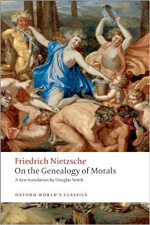 |
On the Genealogy of Morals: A Polemic. By way of clarification and supplement to my last book Beyond Good and Evil "On the Genealogy of Morals (1887) is a book about the history of ethics and about interpretation. Nietzsche rewrites the former as a history of cruelty, exposing the central values of the Judaeo-Christian and liberal traditions - compassion, equality, justice - as the product of a brutal process of conditioning designed to domesticate the animal vitality of earlier cultures. The result is a book which raises profoundly disquieting issues about the violence of both ethics and interpretation. Nietzsche questions moral certainties by showing that religion and science have no claim to absolute truth, before turning on his own arguments in order to call their very presuppositions into question." |
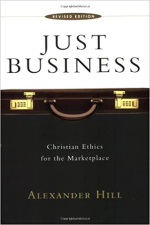 |
Just Business: Christian Ethics for the Marketplace "An ethical man is a Christian holding four aces." So said Mark Twain. But practicing Christians, at least, want to be ethical in all areas of life and work--not just when they are holding four aces. To those faced with the many questions and quandaries of doing business with integrity, Alexander Hill offers a place to begin. Alexander Hill carefully explores the foundational Christian concepts of holiness, justice and love. These keys to God's character, he argues, are also the keys to Christian business ethics. Hill then shows how some common responses to business ethics fall short of a fully Christian response. Finally, he turns to penetrating case studies on such pressing topics as employer-employee relations, discrimination and affirmative action, and environmental damage. This is an excellent introduction to business ethics for students and a bracing refresher for men and women already in the marketplace." |
 |
An Introduction to Biblical Ethics: Walking in the Way of Wisdom "What should we do or not do? What attitudes, behavior and qualities are good? Can we be good without God? What is the highest good, the purpose of human existence? These are the questions the study of ethics seeks to answer. Unlike many approaches to ethics, this book foundationally turns to Scripture, going only as far as Scripture itself goes. The result is an overview of biblical ethics that not only addresses the life of love and wisdom to be lived out by Christians as virtuous individuals, but also as Christians in community, in society and in a world of God?s creation. Key preliminary considerations of love, law, sin and virtue are given their due in this thoroughly revised and updated text. The bulk of the work is then organized around the Ten Commandments and ethical themes springing from them―loving God (commandments 1-4) and loving others (commandments 6-10)" |
 |
Berkeley's 'Principles of Human Knowledge' : A Reader's Guide "Berkeley's Principles of Human Knowledge is a key text in the history of British Empiricism and 18th-century thought. As a free-standing systematic exposition of Berkeley's ideas, this is a hugely important and influential text, central to any undergraduate's study of the history of philosophy." |
 |
Cogitations : A Study of the Cogito in Relation to the Philosophy of Logic and Language and a Study of Them in Relation to the Cogito "Descartes's Cogito ergo sum is one of the best-known of all philosophical formulations, but many philosophers have found it problematic. Katz proposes that the Cogito should be understood as an example of analytical entailment." |
 |
Contemporary Perspectives in Critical and Social Philosophy "Contemporary Perspectives in Critical and Social Philosophy brings together a range of essays concerning ways of conceptualising modernities, subjectivities, and recognition. It highlights recent developments in German critical and social philosophy and includes essays by Martin Seel, Christoph Menke, Max Pensky, Andrew Bowie, and Karl Ameriks, and critical discussions of the works of Manfred Frank, Theodor Adorno and Axel Honneth." |
 |
A Faithful Guide to Philosophy: A Christian Introduction to the Love of Wisdom "A major new introduction to Philosophy from a Christian viewpoint. A Faithful Guide to Philosophy is the only British Christian introduction to Philosophy, a book that will be used as a course textbook and by church study groups and individual readers alike. It covers subjects of central importance to the Christian worldview - the relationship between faith and reason, the objective reality or truth, goodness and beauty, the existence and nature of God, the existence of the human soul and of free will, and so on - from a philosophical viewpoint. This is the broadest range of topics covered by any Christian introduction to Philosophy and will be prized by many." |
 |
The False Prison: Volume Two : Volume Two "This is the second of two volumes which describe the development of Wittgenstein's philosophy from the Notebooks and the Tractatus to Philosophical Investigations and his other later writings. This volume covers his later writings from 1929 onwards.The work as a whole fills a gap in the literature on Wittgenstein between brief introductions and long commentaries. The doctrines and ideas chosen for close discussion are those which reveal the general structure of Wittgenstein's thought. Readers of Wittgenstein concentrate on the details of his work, but often find it difficult to see their place in the overall pattern. This book relates the general to the particular within a clearly delineated framework, thereby making Wittgenstein more accessible to students of philosophy and to non-specialists." |
 |
Feminist Phenomenology Futures "Distinguished feminist philosophers consider the future of their field and chart its political and ethical course in this forward-looking volume. Engaging with themes such as the historical trajectory of feminist phenomenology, ways of perceiving and making sense of the contemporary world, and the feminist body in health and ethics, these essays affirm the base of the discipline as well as open new theoretical spaces for work that bridges bioethics, social identity, physical ability, and the very nature and boundaries of the female body. Entanglements with thinkers such as Heidegger, Merleau-Ponty, Beauvoir, and Arendt are evident and reveal new directions for productive philosophical work. Grounded in the richness of the feminist philosophical tradition, this work represents a significant opening to the possible futures of feminist phenomenological research." |
 |
A Good Life : Philosophy from Cradle to Grave "A Good Life is one man's life (birth, death, education, religion, morality, illness and so on) told through a philosophical lens. It is a riveting examination of the ethical questions we face, and the decisions we must make, and a defence of the idea that at the beating heart of morality we find love. And it is written with the conviction that, on their own, moral rules and principles are childish things - risible and easily refuted. It is only a life in its entirety that can be morally judged. A Good Life is sometimes profoundly funny, sometimes deeply serious. It is as readable as a novel and as provocative as the best philosophy. It is the finest work to date by a charming and brilliant thinker." |
 |
Kids Can Think : Philosophical Challenges for the Classroom "Kids Can Think aims to bring the richness of philosophical thinking into the classroom. It invites teachers to think about the value of such thinking in the modern world, where children have to understand and evaluate ever more complex and challenging ideas. This book includes simple, practical ideas that can be implemented with ease and that will promote and inspire a culture of thinking in classrooms. Teachers and their pupils are presented with a series of scenarios introduced by short narrative texts that explore philosophical themes relating to the self, everyday life, and the universe beyond, and questions that can be tackled by anyone from the young novice to the university professor. Kids Can Think provides many ideas and suggestions for thinking activities throughout that will encourage children to develop their logic and spark a desire to probe into ideas that fascinate inquiring minds." |
|
|
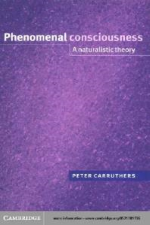
Phenomenal Consciousness : A Naturalistic Theory "Peter Carruthers argues, on the contrary, that the subjective feel of our experience is fully explicable in naturalistic (scientifically acceptable) terms. Drawing on a variety of interdisciplinary resources, he develops and defends a novel account in terms of higher-order thought. He shows that this can explain away some of the more extravagant claims made about phenomenal consciousness, while substantively explaining the key subjectivity of our experience. Written with characteristic clarity and directness, and surveying a wide range of extant theories, this book is essential reading for all those within philosophy and psychology interested in the problem of consciousness." |
|
|
Philosophical Writing : An Introduction "Substantially updated and revised, the third edition of Philosophical Writing is designed to help those with little or no experience in philosophy to think and write successfully. Traces the evolution of a good philosophical essay from draft stage to completion Now includes new examples of the structures of a philosophical essay, new examples of rough drafts, tips on how to study for a test and a new section on how to utilize the internet effectively Written with clarity and wit by a bestselling author." |
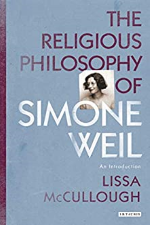 |
The Religious Philosophy of Simone Weil: An Introduction "The French philosopher Simone Weil (1909-1943), a contemporary of Simone de Beauvoir and Jean-Paul Sartre, remains in every way a thinker for our times. She was an outsider, in multiple senses, defying the usual religious categories: at once atheistic and religious; mystic and realist; sceptic and believer. She speaks therefore to the complex sensibilities of a rationalist age. Yet despite her continuing relevance, and the attention she attracts from philosophy, cultural studies, feminist studies, spirituality and beyond, Weil's reflections can still be difficult to grasp, since they were expressed in often inscrutable and fragmentary form. Lissa McCullough here offers a reliable guide to the key concepts of Weil's religious philosophy: good and evil, the void, gravity, grace, beauty, suffering and waiting for God. In addressing such distinctively contemporary concerns as depression, loneliness and isolation, and in writing hauntingly of God's voluntary 'nothingness', Weil's existential paradoxes continue to challenge and provoke. This is the first introductory book to show the essential coherence of her enigmatic but remarkable ideas about religion." |
|
|
The Responsibility of the Philosopher "Over the course of his career, Gianni Vattimo has assumed a number of public and private identities and has pursued multiple intellectual paths. He seems to embody several contradictions, at once defending and questioning religion and critiquing and serving the state. Yet the diversity of his life and thought form the very essence of, as he sees it, the vocation and responsibility of the philosopher. In a world that desires quantifiable results and ideological expediency, the philosopher becomes the vital interpreter of the endlessly complex. As he outlines his ideas about the philosopher's role, Vattimo builds an important companion to his life's work. He confronts questions of science, religion, logic, literature, and truth, and passionately defends the power of hermeneutics to engage with life's conundrums. Vattimo conjures a clear vision of philosophy as something separate from the sciences and the humanities but also intimately connected to their processes, and he explicates a conception of truth that emphasizes fidelity and participation through dialogue." |